We are hiring passionate trainers to join our growing team! Share your expertise with aspiring professionals in a dynamic learning environment. Enjoy competitive compensation, flexible schedules, and rewarding teaching experiences. Whether you're a seasoned instructor or industry expert, we provide the platform to shape futures. Apply now to become part of our elite training team!
Featured Article
Future of Java Full Stack Development: What’s Next in 2026 & Beyond

Future of Java Full Stack Development: What’s Next in 2026 & Beyond

The technology landscape is changing faster than ever, and Java — one of the most reliable programming languages — continues to evolve at the center of it. As we move toward 2026 and beyond, the demand for skilled Java Full Stack developers is stronger than ever. Today’s developers are expected to master more than just coding. They must understand cloud technologies, AI integrations, microservices, and modern front-end frameworks. If you want to future-proof your career in software development, learning these next-generation skills is the way forward. For those looking to master everything from Java backend to advanced frontend frameworks and placement preparation, explore ICLP Tech’s Full Stack Java Training — designed for real-world, job-ready learning.

8 min read
Published Today
Web Development

The Evolution of Java Full Stack Development

From Monolithic Apps to Microservices: Earlier, Java applications were built as large, monolithic systems. But now, companies prefer microservices for flexibility, scalability, and faster updates. A Full Stack Java developer in 2026 must know how to build and manage modular services using Spring Boot, Spring Cloud, or Micronaut. Rise of Cloud-Native Java: Enterprises are rapidly adopting cloud-native architectures using Docker and Kubernetes. Developers who can deploy Java applications on AWS, Azure, or Google Cloud are already ahead of the curve. Cloud-native development ensures better performance, cost efficiency, and scalability — the three pillars of modern software. Next-Gen Frameworks: While Spring Boot still dominates the market, lighter and faster frameworks like Quarkus and Micronaut are gaining attention. These frameworks are optimized for serverless environments and cloud deployments, making them ideal for the next era of enterprise development.

Frontend Innovations to Watch

Modern Java developers are expected to master frontend technologies like React, Angular, and Next.js to build dynamic, user-friendly interfaces. Frontend development is shifting toward TypeScript, making code more scalable, maintainable, and error-free. Component-driven architecture and server-side rendering (SSR) will become essential for improving performance, SEO, and user experience. A successful Java Full Stack developer must combine backend expertise with strong UI/UX implementation skills to deliver seamless end-to-end digital solutions.

Integration of AI and Automation

AI is enhancing developer productivity with intelligent code suggestions, automated debugging, and faster deployment. Tools powered by AI are improving test automation, reducing repetitive tasks, and accelerating development cycles. Java Full Stack developers will increasingly collaborate with AI systems to build smarter, more efficient applications. Skills in AI APIs, automation workflows, and data processing will make developers more competitive in the job market. AI isn’t replacing developers — it’s elevating their capabilities to deliver higher-quality solutions in less time.

Skills Every Java Full Stack Developer Needs by 2026

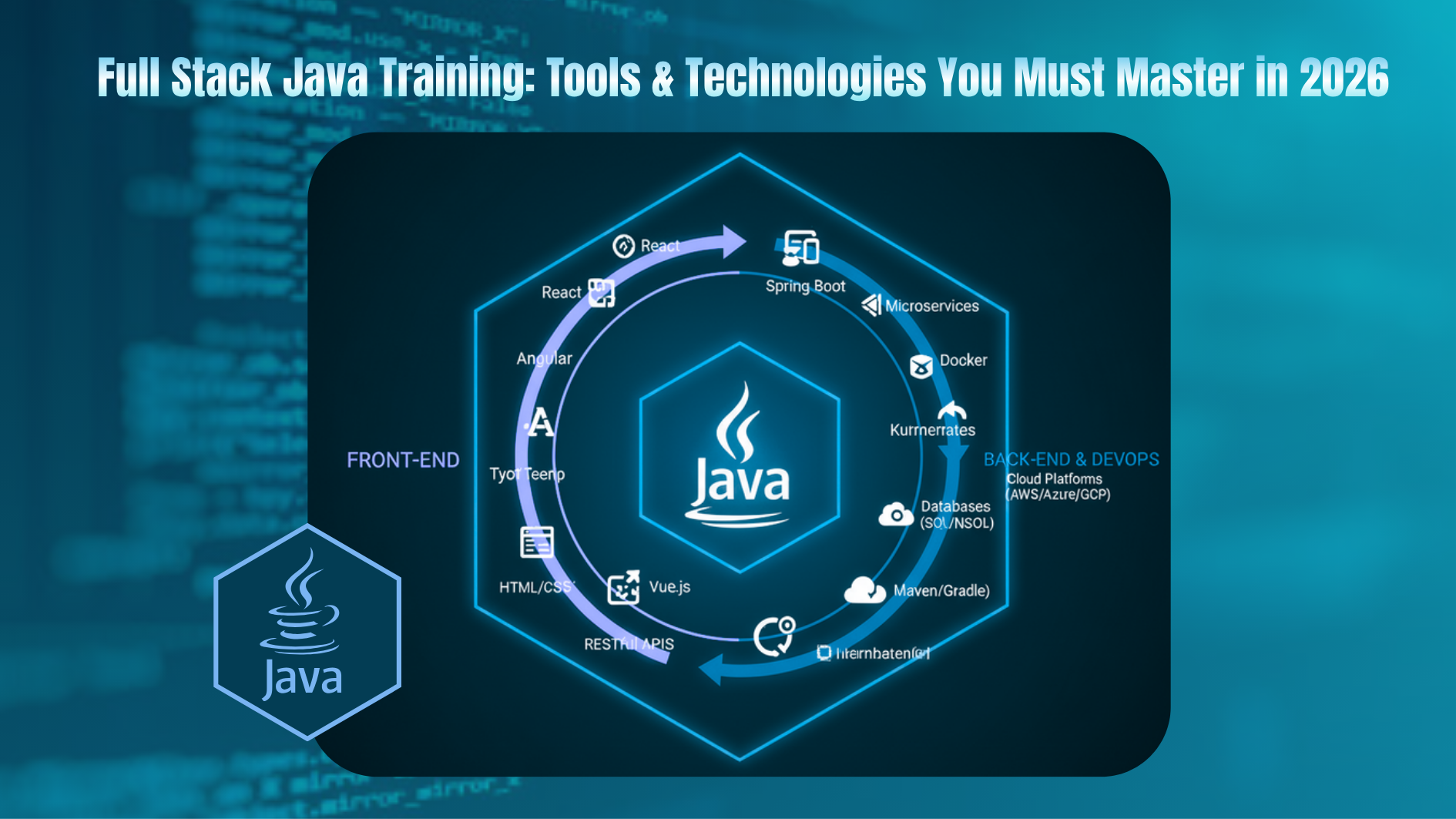
Advanced Java (Java 17 or above) — Focus on modern syntax, performance improvements, and concurrency enhancements like virtual threads. Backend Frameworks — Proficiency in Spring Boot, Hibernate, and exposure to lightweight frameworks like Quarkus. Frontend Mastery — Skills in React, Next.js, or Angular for building rich and dynamic user interfaces. Databases — Strong understanding of MySQL, PostgreSQL, and NoSQL options like MongoDB. DevOps & Cloud — Hands-on experience with Docker, Jenkins, Kubernetes, and cloud platforms like AWS. API Development — Building secure and scalable RESTful and GraphQL APIs with proper JSON data handling. Version Control — Git and GitHub workflows for collaborative development. Testing & CI/CD — Automated testing with JUnit/Mockito and continuous integration pipelines. Hands-on project training — Courses like ICLP Tech’s Full Stack Java Training Online provide real-time projects and placement support to ensure job readiness.

Career Outlook and Salary Trends for Java Full Stack Developers

High Demand — With digital transformation accelerating across industries, Java Full Stack developers are increasingly sought after to manage end-to-end development. Industry Opportunities — By 2026, demand will be strong in fintech, healthcare, e-commerce, and cloud service companies. Salary Trends — Average salaries are expected to grow due to the versatile nature of the role, combining both frontend and backend expertise. Placement Advantage — Graduates who upskill with Full Stack Java training now are likely to see the best placement opportunities in the next few years. Future-Proof Skills — Continuous learning in modern Java, cloud technologies, and frontend frameworks will ensure competitiveness in the job market.

How to Future-Proof Your Career in Java Full Stack

Build Real Projects — Create at least 2–3 end-to-end applications to gain hands-on experience. Master Deployment — Learn Docker and Kubernetes for deploying applications in containerized environments. Stay Updated — Follow Java releases and experiment with new frameworks to remain competitive. Get Certified — Enroll in professional training programs that offer certification and placement assistance. Join the Cloud Revolution — Understand how microservices and serverless applications operate on AWS or Azure. Continuous Learning — The best way to stay ahead is to work on live, industry-level projects, like those offered in ICLP Tech’s Full Stack Java Course with coding practice, cloud deployment, and interview readiness. Enroll Now in ICLP Tech’s Full Stack Java Course

Future Predictions for 2026 & Beyond

Hybrid Development — Combining Java with AI APIs will become mainstream for smarter applications. Serverless Java — Serverless functions will be widely adopted for micro-deployments and scalable workloads. Cloud-Native DevOps — Automated pipelines will handle most deployment steps, improving efficiency and reliability. Evolving Java Ecosystem — Java will continue to grow with modular architectures and lightweight runtime environments. High-Earning Developers — Professionals with end-to-end expertise in frontend, backend, and cloud technologies will command the highest salaries.

Frequently Asked Questions

Q Is Java Full Stack still a good career choice in 2026?

Absolutely! Java remains one of the most stable and in-demand languages. With new frameworks and cloud integration, Full Stack Java developers will continue to be highly employable.

QWhat should I learn first — backend or frontend?

Start with core Java and backend fundamentals (Spring Boot), then move to frontend frameworks like React or Angular. Full Stack developers need both, but backend strength builds a stronger foundation.

QHow long does it take to become a Full Stack Java developer?

Typically 4–8 months, depending on your practice and project work. Courses with guided projects and mentor feedback can accelerate your progress.

QDoes ICLP Tech provide placement support?

Yes! ICLP Tech offers placement-focused Full Stack Java training with real-world projects and mock interview sessions to help you secure your dream job.

Conclusion

The future of Java Full Stack Development is full of opportunities. As businesses continue to innovate with cloud, AI, and microservices, the demand for versatile developers will only increase. By mastering the latest tools, staying updated with frameworks, and focusing on cloud deployment, you can build a strong and rewarding tech career. If you’re ready to take that step, join ICLP Tech’s Full Stack Java Training Online — a course built to prepare you for the jobs of 2026 and beyond.

Found this helpful?