We are hiring passionate trainers to join our growing team! Share your expertise with aspiring professionals in a dynamic learning environment. Enjoy competitive compensation, flexible schedules, and rewarding teaching experiences. Whether you're a seasoned instructor or industry expert, we provide the platform to shape futures. Apply now to become part of our elite training team!
Featured Article
How to Learn Workday HCM from Scratch: Beginner-to-Advanced Learning Roadmap

How to Learn Workday HCM from Scratch: Beginner-to-Advanced Learning Roadmap

Workday Human Capital Management (HCM) is a cloud-based human resources management solution that helps organizations manage employee information, recruitment, compensation, benefits, talent management, and workforce planning. As businesses increasingly adopt cloud-based HR technologies, Workday HCM knowledge can help professionals explore opportunities in HR technology, functional consulting, business analysis, and HR systems support. For beginners, fresh graduates, HR professionals, and experienced IT professionals, understanding Workday HCM can be a valuable step toward developing enterprise software skills. Choosing the right Workday HCM training program can help learners understand important modules, business processes, reporting concepts, and practical HR scenarios. At ICLP Technologies, learners can explore software training programs and career-oriented learning opportunities. If you are planning to develop your Workday HCM knowledge, this guide explains how to start from scratch and progress toward advanced concepts.

8 min read
Published Today
Web Development

What Is Workday HCM

Definition — A cloud-based human capital management platform used by organizations to support workforce administration and HR processes. Capabilities — Managing employee information, organizational structures, recruitment, compensation, benefits, performance, and other workforce-related activities. How organizations use it — To streamline HR workflows, maintain employee records, support workforce planning, and improve access to HR information. Why fundamentals matter — Understanding these basics is important before beginning a structured Workday HCM online training program.

Why Learn Workday HCM

Growing importance of cloud HR systems — Organizations use cloud platforms to support workforce administration and HR operations. Multiple functional areas — Core HCM, Compensation, Benefits, Recruiting, Talent Management, and other modules. Opportunities across industries — Skills may be relevant in technology, consulting, healthcare, financial services, manufacturing, and other sectors. Career development — HR and IT professionals can build knowledge relevant to HRIS, functional analysis, reporting, and support roles. Business process knowledge — Learners understand how employee lifecycle processes are structured and managed. Choosing a program — Explore Workday HCM training and review the curriculum that best matches your experience and career goals.

Workday HCM Modules Explained

Workday Core HCM — The foundation for employee information and organizational structures, covering worker records, supervisory organizations, staffing models, job profiles, positions, worker types, and employee lifecycle management. Workday Business Processes — Define how HR activities move through configured steps and approvals, such as hiring, job changes, promotions, transfers, and terminations. Workday Compensation — Supports employee pay and compensation programs, including compensation plans, salary structures, eligibility rules, allowances, and review processes. Workday Benefits — Supports administration of benefit programs, including benefit plans, eligibility requirements, enrollment processes, and benefits administration. Workday Recruiting — Supports job requisitions, candidate management, interview workflows, offer management, and hiring processes. Workday Talent Management — Supports employee development through performance reviews, goals, talent assessments, and career development. Workday Absence and Time Tracking — Support leave administration, absence plans, time entry, eligibility rules, and approval workflows. Prioritizing modules — Learners interested in functional expertise can explore Workday HCM functional training and prioritize modules based on their intended career path.
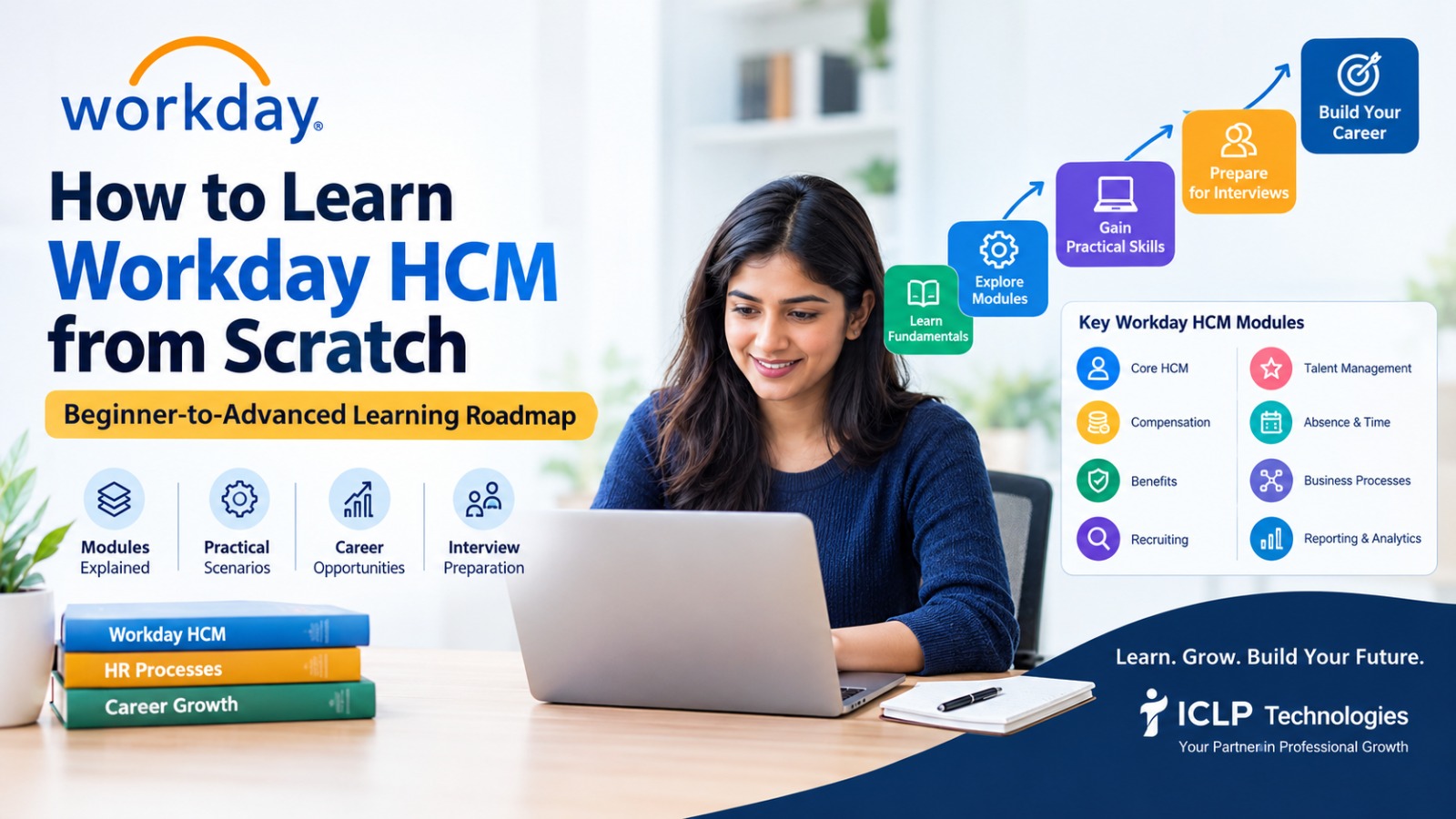
How to Learn Workday HCM from Scratch

Stage 1: Beginner Level — Learn HR and Workday fundamentals: introduction to Workday HCM, HR management fundamentals, employee lifecycle management, organizational structures and hierarchies, employee data management, Workday terminology and navigation, and an introduction to business processes. Goal: understand how Workday HCM supports HR operations and employee management. Stage 2: Intermediate Level — Understand Core HCM and functional modules: supervisory organizations and staffing models, job profiles and positions, business process workflows, condition rules and approval concepts, Compensation and Benefits fundamentals, Recruiting and Talent Management, Absence and Time Tracking, and reporting and security fundamentals. Goal: understand how Workday concepts relate to real HR requirements. Stage 3: Advanced Level — Explore configuration and solution concepts: business process configuration, advanced workflow scenarios, functional requirement analysis, calculated fields and reporting, security roles and access, integration fundamentals, troubleshooting and documentation, and cross-functional scenarios. Goal: analyze HR requirements and understand how Workday solutions are structured. Training environment note — Advanced configuration practice depends on the permissions and features available in your authorized training environment. Stage 4: Practical Learning and Scenario-Based Practice — Work through employee hiring workflows, transfers and promotions, compensation change scenarios, leave request approvals, recruitment from requisition to offer, HR reporting requirements, and organizational changes. If no environment is available — Use guided demonstrations, case studies, sample requirements, and process diagrams. Explore practical learning options — Explore Workday HCM practical training to review the learning options available through ICLP Tech.

Essential Skills Required to Learn Workday HCM

Core skills — Human resource management fundamentals, employee lifecycle and workforce administration, Workday terminology and navigation, and business process understanding. Analytical skills — Functional requirement analysis, reporting fundamentals, and security and role-based access concepts. Professional skills — Documentation and problem-solving, plus communication and stakeholder management. Functional vs technical — Functional learners should focus on HR processes and business requirements, while those interested in technical or integration roles should also study integration concepts, APIs, XML, and reporting technologies.

Who Can Learn Workday HCM

Fresh Graduates — Can begin with HR fundamentals and Core HCM concepts. HR Professionals — HR executives and HR operations professionals can build on their knowledge of recruitment, employee administration, compensation, and benefits. Payroll and Benefits Professionals — Can explore related Workday functional areas to expand their understanding of HR systems. IT Professionals — Can learn functional concepts before exploring reporting, integrations, or technical specializations. SAP HCM and HRIS Professionals — Existing HR systems knowledge is useful when learning Workday terminology and processes. New to enterprise HR applications — A structured Workday HCM course for beginners can provide a starting point.

Workday HCM Career Opportunities

Potential roles — Workday HCM Functional Analyst, Workday HCM Consultant, Workday HRIS Analyst, Workday Reporting Analyst, Workday Business Process Analyst, Workday HCM Support Analyst, and Workday Integration Analyst (with additional technical preparation). Role differences — Functional positions focus on HR processes, business requirements, and configuration, while reporting and integration positions may require additional technical knowledge. Employer expectations — Employers may require previous implementation experience, relevant credentials, or experience with authorized Workday environments. Completing a course alone does not guarantee employment. Next step — For learners planning their next career step, ICLP Technologies provides a starting point to explore software training programs and relevant learning opportunities.

How Long Does It Take to Learn Workday HCM

Depends on you — Background, study schedule, selected modules, and access to practical learning all affect the time required. Planning estimate — A beginner might plan an initial roadmap over approximately 8–12 weeks, followed by additional time for advanced concepts, scenario-based practice, and interview preparation. This is not a guaranteed proficiency timeline. Prior experience — Learners with HR or HRIS experience may find certain concepts easier, while beginners may need more time to build foundations.

Workday HCM Interview Questions and Answers

What is Workday HCM? — A cloud-based human capital management solution that supports employee information management, organizational structures, recruitment, compensation, benefits, and other HR processes. What is a supervisory organization? — A management structure in Workday that organizes workers by management relationships and supports staffing and business processes. What is the employee lifecycle? — The stages of an employee's relationship with an organization, including recruitment, hiring, onboarding, job changes, development, and termination. What are Workday business processes? — They define the steps, approvals, and actions for organizational activities such as hiring, transfers, promotions, and terminations. What is the difference between a job profile and a position? — A job profile describes the general characteristics and responsibilities of a type of job, while a position represents a specific place in the staffing structure, where position management is used. What are condition rules? — They determine whether specified criteria are met and can control the applicability of workflow steps or business process behavior, depending on configuration. Why is reporting important? — It helps organizations retrieve and analyse workforce information for operations, management decisions, and HR planning. Why is security important? — Security controls ensure users can access information and perform actions according to their assigned permissions and responsibilities. Preparation tip — For more preparation, explore Workday HCM interview preparation and practise explaining each concept using relevant business examples.

How to Choose the Right Workday HCM Training Program

Course syllabus — Confirm that the curriculum covers Core HCM and the functional modules relevant to your goals. Trainer experience — Understand the trainer's background and teaching approach. Practical learning — Ask whether hands-on environment access is included and what activities you can perform. Scenario-based training — Check whether the course covers realistic HR business processes. Interview preparation — Review whether practice questions, mock interviews, and resume guidance are offered. Flexible learning options — Check the schedule, delivery format, and access to recorded sessions if available. Course transparency — Confirm fees, duration, included services, and any additional costs before enrolling. Compare your options — If you are comparing software training options, visit ICLP Tech to explore available courses and identify the program that matches your learning objectives.

Frequently Asked Questions

QCan beginners learn Workday HCM from scratch?

Yes. Beginners can start with HR fundamentals, Workday terminology, organizational structures, and Core HCM before progressing to functional modules and advanced concepts.

QDo I need coding skills to learn Workday HCM?

Coding is generally not necessary to begin learning functional Workday HCM. Technical and integration-oriented roles may require additional knowledge of APIs, XML, integrations, and related technologies.

QWhich Workday HCM module should I learn first?

Core HCM is a useful starting point because it introduces employee data, organizational structures, staffing concepts, and foundational business processes.

QCan freshers pursue Workday HCM careers?

Freshers can build foundational knowledge and apply for suitable entry-level opportunities. Requirements depend on employers, available positions, practical skills, and experience expectations.

QIs hands-on practice important in Workday HCM?

Yes. Scenario-based exercises and access to an authorized training environment, where available, can help learners understand how Workday concepts apply to business requirements.

QIs Workday HCM the same as Workday Recruiting?

No. Core HCM supports foundational workforce management, while Recruiting focuses on recruitment processes. Recruiting is part of the broader Workday HCM ecosystem.

QCan experienced HR professionals learn Workday HCM?

Yes. HR professionals can build on their knowledge of recruitment, compensation, benefits, and employee administration to understand how those processes are supported in Workday.

QWhere can I learn Workday HCM online?

You can compare relevant course syllabuses, delivery formats, trainer experience, and practical learning options through software training providers such as ICLP Technologies.

✨
Conclusion

Learning Workday HCM from scratch requires a structured approach that begins with HR fundamentals and Core HCM before progressing to functional modules, business processes, reporting, security, and scenario-based learning. Whether you are a fresher, an HR professional, or an experienced IT professional, building Workday HCM knowledge can help you understand modern enterprise HR systems and prepare for relevant learning and career opportunities. If you want to develop your skills in enterprise software, explore the Workday HCM training and other relevant learning programs available through ICLP Technologies. Review the syllabus, practical learning arrangements, and course details to choose a learning path aligned with your goals.

Found this helpful?