We are hiring passionate trainers to join our growing team! Share your expertise with aspiring professionals in a dynamic learning environment. Enjoy competitive compensation, flexible schedules, and rewarding teaching experiences. Whether you're a seasoned instructor or industry expert, we provide the platform to shape futures. Apply now to become part of our elite training team!
Featured Article
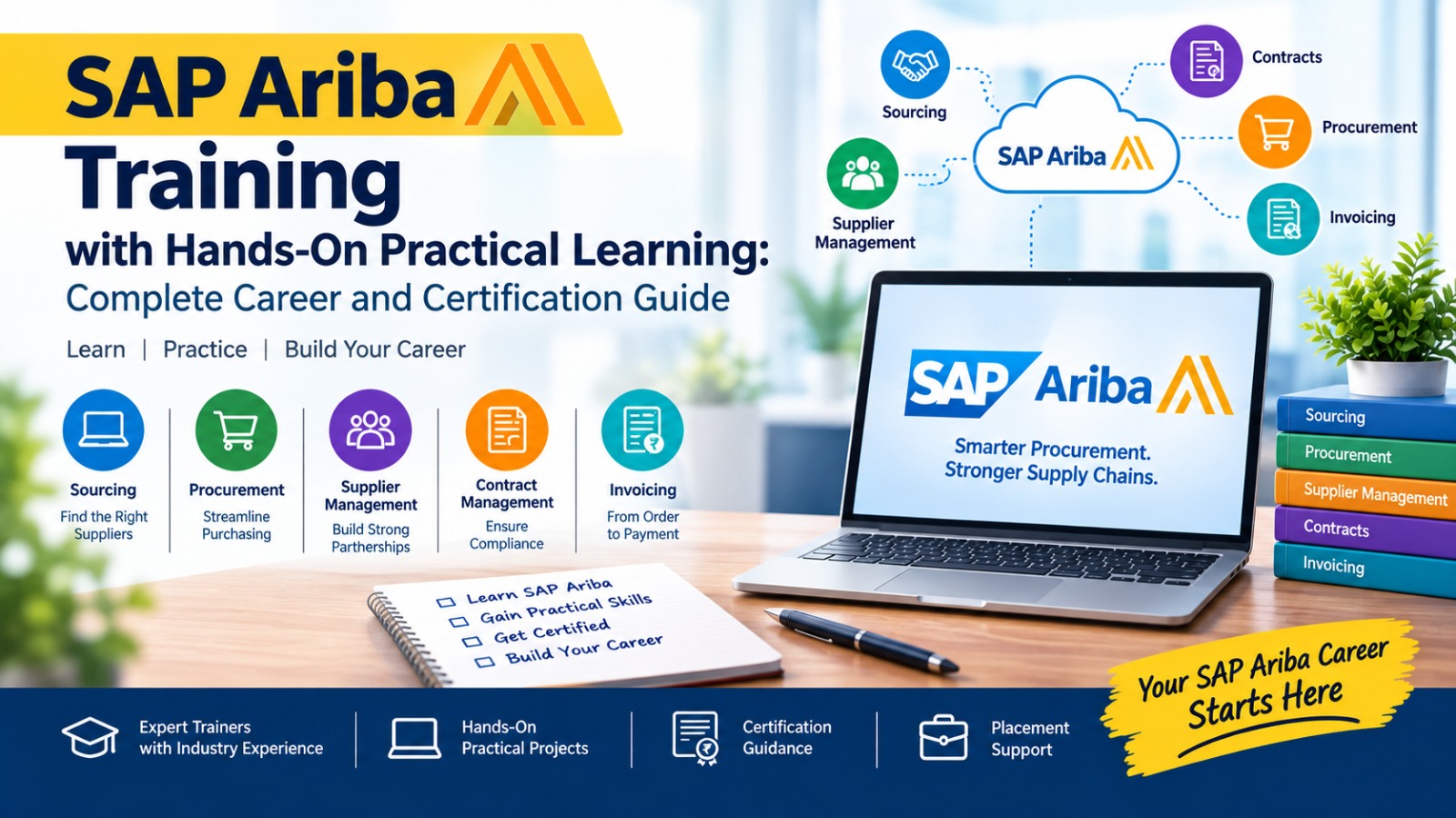
SAP Ariba Training with Hands-On Practical Learning: Complete Career and Certification Guide
SAP Ariba has become an important cloud-based solution for organizations looking to modernize procurement, sourcing, supplier management, and purchasing processes. As businesses increasingly adopt digital procurement platforms, professionals with SAP Ariba skills can build expertise across procurement operations, supplier collaboration, sourcing, and business process management. For beginners, working professionals, procurement specialists, supply chain professionals, and SAP consultants, SAP Ariba training with hands-on practical learning can provide a structured way to understand how modern procurement processes work. This guide explains SAP Ariba, its major areas, learning requirements, practical training approach, certification guidance, career opportunities, and a step-by-step learning roadmap.
8 min read
Published Today
Web Development
What Is SAP Ariba
Purpose — A cloud-based procurement and supply chain collaboration solution designed to help organizations manage business purchasing and supplier-related processes digitally. The problem it solves — Traditional procurement often involves manual steps, emails, spreadsheets, approvals, supplier communications, purchase orders, invoices, and documentation; SAP Ariba streamlines these through connected digital workflows. Areas it supports — Strategic sourcing, procurement, supplier management, contract management, purchase requisitions, purchase orders, supplier collaboration, catalog management, invoice management, spend visibility, and procurement process automation. Business process focus — Understanding these business processes is important for anyone planning to build a career in SAP Ariba.
Why Learn SAP Ariba
Digital Procurement — Learners understand how procurement processes can be managed using cloud-based enterprise solutions. Strategic Sourcing — Functionality for sourcing activities, supplier participation, bidding, evaluation, and related procurement processes. Supplier Management — How suppliers are onboarded, managed, evaluated, and collaborated with through digital processes. Procurement Automation — Reducing repetitive manual procurement activities through structured workflows and approvals. SAP Ecosystem Knowledge — Valuable exposure to SAP procurement concepts and integration scenarios.
SAP Ariba Training with Hands-On Practical Learning
Why practice matters — Practical exposure is especially important when learning enterprise applications, so training should connect concepts with realistic procurement scenarios. Practical examples — Creating procurement scenarios, understanding supplier processes, working with sourcing events, purchase requisitions, purchase order processes, supplier onboarding workflows, contract-related processes, invoice scenarios, approval workflows, procurement reporting concepts, and integration concepts. Beyond terminology — Learners see how SAP Ariba concepts are applied in real business environments instead of simply memorizing terms.
SAP Ariba Modules and Important Learning Areas
SAP Ariba Sourcing — Sourcing events, supplier participation, RFQs, auctions, bidding, supplier evaluation, and award decisions; useful for professionals in procurement and strategic purchasing. SAP Ariba Procurement — Requisitions, catalog purchasing, purchase orders, approvals, buying processes, procurement workflows, receiving, and invoice-related processes. SAP Ariba Supplier Management — Supplier registration, onboarding, information, qualification, evaluation, and lifecycle management, which help organizations maintain accurate supplier data and improve collaboration. SAP Ariba Contracts — Contract creation concepts, lifecycle, compliance, repositories, contract-related workflows, and supplier agreements, giving a broader view of the procurement lifecycle. SAP Ariba Buying and Invoicing — Purchase requisitions, purchase orders, goods receipt, invoice processing, approvals, invoice reconciliation concepts, and exception handling, connecting purchasing with payment processes.
SAP Ariba Learning Roadmap
Step 1: Understand Procurement Fundamentals — Purchase requisition, purchase order, RFQ, supplier, invoice, goods receipt, contract, and sourcing. Step 2: Learn SAP Fundamentals — Basic SAP concepts and enterprise business processes. Step 3: Understand SAP Ariba Architecture and Navigation — The environment, terminology, interfaces, and major solution areas. Step 4: Learn Sourcing — Sourcing events, supplier participation, bidding, evaluation, and award processes. Step 5: Learn Procurement — Requisition-to-order and related purchasing processes. Step 6: Learn Supplier Management — Supplier registration, onboarding, qualification, and lifecycle concepts. Step 7: Understand Contracts — How procurement contracts are created, managed, and monitored. Step 8: Study Integration Concepts — How SAP Ariba interacts with other enterprise systems and SAP environments. Step 9: Practice Real-World Scenarios — Working through practical procurement scenarios rather than only theory. Step 10: Prepare for Certification and Interviews — Reviewing key concepts, practicing scenario-based questions, and preparing for functional interviews.
Who Can Learn SAP Ariba
Procurement Professionals — Procurement executives and purchasing professionals can learn how digital systems support their daily activities. Supply Chain Professionals — Expanding understanding of procurement and supplier collaboration. SAP Beginners — Exploring SAP Ariba as a procurement-focused specialization at the start of an SAP career. Working Professionals — Those with procurement, purchasing, sourcing, or ERP experience who want additional technology skills. Commerce and Management Graduates — Graduates from commerce, business administration, finance, supply chain, and management backgrounds. SAP Consultants — Existing SAP professionals expanding their functional knowledge. Fresh Graduates — Freshers interested in enterprise software and procurement technology who want foundational knowledge before entering the job market.
Prerequisites for SAP Ariba Training
No programming expertise needed — There is no need to be an expert in programming to begin learning SAP Ariba from a functional perspective. Helpful background — Basic computer skills, understanding of business processes, basic procurement knowledge, supply chain fundamentals, ERP awareness, and basic purchasing terminology. Experience helps — Professionals with procurement or SAP experience may find advanced business scenarios easier; freshers can begin with procurement fundamentals before moving into SAP Ariba functionality.
Benefits of SAP Ariba Hands-On Training
Scenario-Based Learning — Understanding how procurement processes work through realistic business scenarios. Better Process Understanding — Learning the complete flow from requirement to purchasing and invoicing instead of individual transactions separately. Improved Interview Preparation — Practical knowledge helps candidates explain procurement scenarios more clearly. Functional Confidence — Working with practical examples makes SAP Ariba terminology and workflows easier to understand. Business Process Knowledge — Hands-on exercises connect SAP Ariba functionality with actual procurement requirements.
SAP Ariba Practical Training: Example Business Scenario
Scenario — A company needs to purchase IT equipment. Process flow — Business Requirement → Purchase Requisition → Supplier Selection → Sourcing → Purchase Order → Supplier Confirmation → Goods Receipt → Invoice → Payment. What learners should know — What happens at each stage and which business process is involved. Taking it further — Practical training can add multiple suppliers, approvals, sourcing events, purchase orders, invoices, and exceptions, helping students understand procurement as an end-to-end process.
SAP Ariba Certification Guidance
Understand the requirements first — Before preparing, candidates should understand the relevant certification path, exam structure, topic coverage, and current SAP certification requirements. Preparation strategy — Understand the certification scope, study the relevant SAP Ariba topics, review procurement fundamentals, practice business scenarios, revise terminology, work through mock questions, identify knowledge gaps, and follow the applicable official SAP requirements. Complement, don't replace — Certification should complement practical knowledge rather than replace it.
SAP Ariba Career Opportunities
Consulting roles — SAP Ariba Consultant, SAP Ariba Functional Consultant, SAP Procurement Consultant, SAP Ariba Support Consultant, Procurement Technology Consultant, SAP Sourcing Consultant, and ERP Procurement Consultant. Analyst and specialist roles — Supplier Management Specialist, Procurement Business Analyst, and SAP Functional Analyst. Varies by organization — Job responsibilities and requirements depend on the organization, experience level, SAP landscape, and specialization.
Skills to Develop for a SAP Ariba Career
Procurement Knowledge — Purchasing, sourcing, supplier management, contracts, and invoice processes. SAP Knowledge — A broader understanding of SAP business processes. Integration Awareness — Basic concepts behind integration between SAP Ariba and other enterprise systems. Communication Skills — Consultants often work with business users, technical teams, suppliers, and project stakeholders. Documentation Skills — Documenting business requirements, processes, configurations, and test scenarios. Problem-Solving Skills — Analyzing business requirements and identifying appropriate solutions. Interview Skills — Explaining business scenarios instead of only listing technical terms.
SAP Ariba Training in Chennai
What to look for — Learners searching for SAP Ariba training in Chennai can benefit from a program with structured modules and practical exposure. Ideal curriculum — SAP Ariba fundamentals, procurement concepts, sourcing, supplier management, contracts, buying and invoicing, integration concepts, real-world scenarios, practical exercises, interview preparation, and certification guidance. Evaluate the provider — Consider the trainer's industry experience, training methodology, practical environment, course coverage, and post-training support.
SAP Ariba Training with Practical Projects
Sample project — Implementing procurement processes for a fictional manufacturing organization that needs to digitize supplier sourcing and procurement. Project activities — Analyze procurement requirements, define supplier processes, create sourcing scenarios, design procurement workflows, understand approval processes, configure relevant business scenarios, test procurement processes, analyze potential exceptions, and document the solution. Value — Projects make enterprise software learning more application-oriented and show how SAP Ariba knowledge applies to business situations.
SAP Ariba Interview Preparation
Basic questions — What is SAP Ariba, what are the major solution areas, and what are strategic sourcing, supplier management, procurement, a purchase requisition, and a purchase order. Scenario-based questions — How to handle supplier onboarding, how a sourcing event works, what happens after a requisition is approved, how procurement can be streamlined, how sourcing relates to procurement, and how to troubleshoot a procurement process issue. Focus on the process — Candidates should understand the business process behind each question.
SAP Ariba vs Traditional Procurement
Communication — Manual communication versus digital collaboration. Documentation — Paper-based processes versus electronic workflows. Tracking — Spreadsheet-based tracking versus centralized system processes. Approvals — Manual approvals versus workflow-based approvals. Visibility — Limited visibility versus improved process visibility. Supplier interaction — Separate supplier communication versus digital supplier collaboration. Note — The exact benefits depend on how an organization implements and uses the solution.
Why Practical Learning Matters for SAP Ariba
Real-world connection — SAP Ariba is closely tied to real business processes, so knowing definitions alone may not be enough for a functional role. Practical flow — Business Requirement → Process Design → SAP Ariba Functionality → Testing → Business Scenario → Issue Resolution. Bridging the gap — This approach helps connect classroom learning with workplace expectations.
SAP Ariba Career Roadmap
Beginner — Learn procurement fundamentals and SAP basics. SAP Ariba Learner — Study sourcing, procurement, supplier management, contracts, and invoicing. Hands-On Practitioner — Practice business scenarios and project workflows. Certification Preparation — Prepare for the applicable SAP certification. Interview Preparation — Practice functional and scenario-based questions. Entry-Level SAP Ariba Role — Apply knowledge to support, analyst, procurement technology, or consulting roles. Experienced SAP Ariba Professional — Develop expertise in implementation, integration, optimization, or specialized procurement processes.
Frequently Asked Questions
QWhat is SAP Ariba used for?
SAP Ariba is used to support procurement, sourcing, supplier management, purchasing, contracting, and supplier collaboration processes.
QIs SAP Ariba suitable for beginners?
Yes. Beginners can start with procurement fundamentals and gradually learn SAP Ariba functionality.
QIs programming required for SAP Ariba?
For functional SAP Ariba learning, extensive programming knowledge is generally not the starting requirement. Business process knowledge is important.
QIs SAP Ariba a good skill for procurement professionals?
SAP Ariba can help procurement professionals understand how digital platforms support sourcing, purchasing, supplier management, and related processes.
QWhat should I learn before SAP Ariba?
Basic procurement concepts, purchasing terminology, ERP fundamentals, and business process knowledge can provide a useful foundation.
QWhat are the major SAP Ariba areas?
Important areas include sourcing, procurement, supplier management, contracts, and buying/invoicing processes.
QCan freshers learn SAP Ariba?
Yes. Freshers can start with procurement fundamentals and progress through structured SAP Ariba learning.
QDoes SAP Ariba require hands-on practice?
Hands-on practice can be valuable because it helps learners connect SAP Ariba functionality with realistic procurement scenarios.
QCan SAP Ariba knowledge help with SAP careers?
SAP Ariba knowledge can be relevant to procurement consulting, SAP functional roles, business analysis, support, and procurement technology positions, depending on experience and employer requirements.
QIs SAP Ariba certification necessary?
Certification requirements vary by role and employer. Certification can demonstrate knowledge, while practical experience and business process understanding are also important.
✨
Conclusion
SAP Ariba brings together important procurement and supplier-related processes within a digital enterprise environment. For procurement professionals, SAP beginners, fresh graduates, supply chain professionals, and SAP consultants, learning SAP Ariba can provide an opportunity to develop knowledge of modern procurement technology. A structured SAP Ariba training with hands-on practical learning approach can cover procurement fundamentals, sourcing, supplier management, contracts, buying and invoicing, integration concepts, projects, certification preparation, and interview skills. If your goal is to build SAP Ariba knowledge for professional development, focus on three areas: strong procurement fundamentals, practical SAP Ariba experience, and continuous skill development. At ICLP Technologies, learners can build practical SAP Ariba skills through career-oriented training designed around structured learning, real-world scenarios, hands-on exposure, IT professional domain expert mentors, training recordings, learning materials, project support, resume preparation, interview support, placement assistance, and job support.